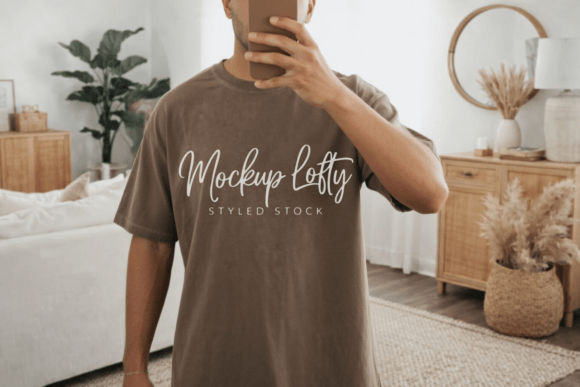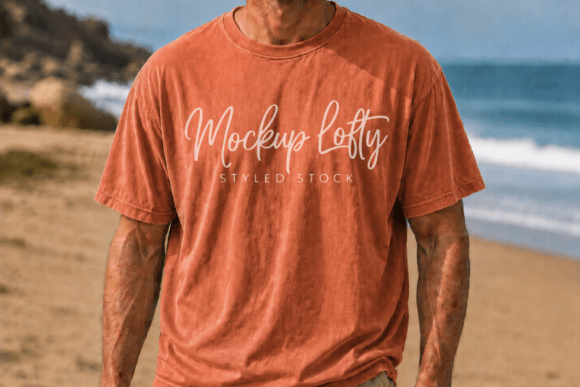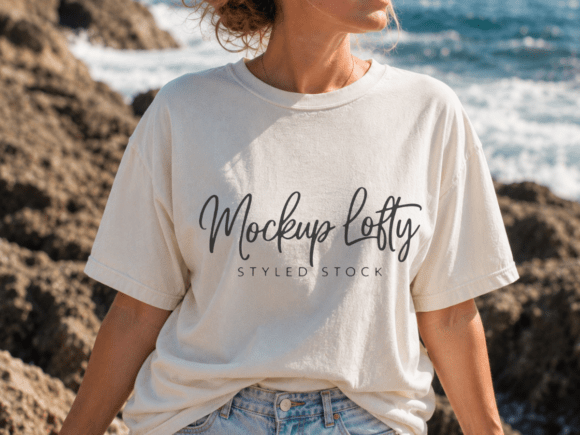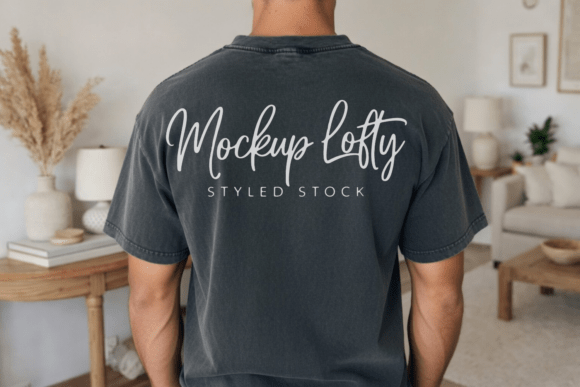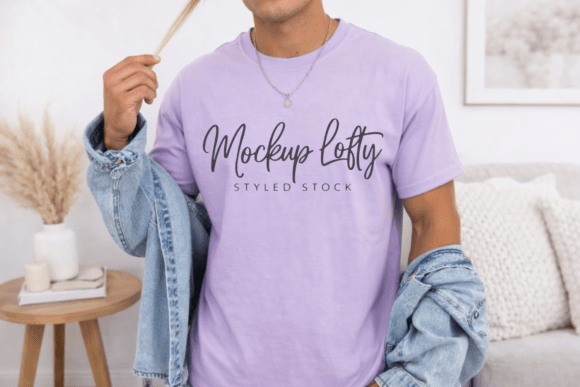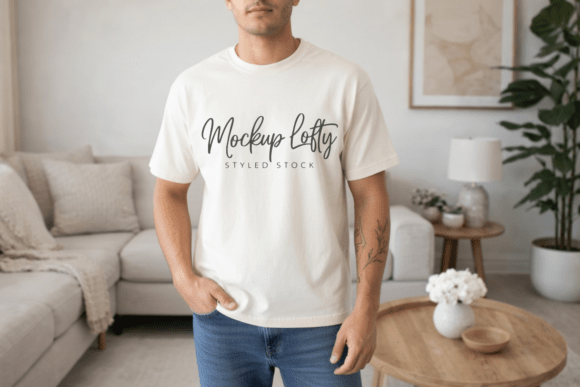
Ivory Comfort Colors 1717 T-Shirt Mockup: Elevating Design Presentation with Authentic Minimalism
When presenting apparel designs—whether for client pitches, e-commerce listings, or brand identity development—the choice of mockup isn’t just about visual fidelity. It’s about context, tone, and credibility. The Ivory Comfort Colors 1717 T-Shirt Mockup stands apart not because it offers more layers or complex editing features than others, but because it delivers a rare combination: understated realism, consistent color integrity, and seamless integration into diverse creative workflows. Unlike high-gloss, studio-lit alternatives that emphasize dramatic lighting or exaggerated fabric texture, this mockup leans into quiet confidence—mirroring the ethos of the actual garment it represents.
A Real-World Foundation: Why the Comfort Colors C1717 Matters
The physical Comfort Colors C1717 is a heavyweight 6.1 oz cotton t-shirt known for its relaxed drape, subtle slub texture, and intentionally unbleached ivory base. That base isn’t stark white—it’s warm, organic, and slightly variable across dye lots, lending authenticity to hand-dyed, vintage-inspired, or eco-conscious brands. When translated into a digital mockup, preserving that nuance is non-negotiable. The Ivory Comfort Colors 1717 Mockup captures this precisely: no oversaturation, no artificial brightness boost, no flattening of tonal depth. Designers working with muted palettes—think sage greens, terracotta reds, charcoal greys, or oatmeal neutrals—find their colors translate faithfully, without unexpected shifts in contrast or warmth.
This fidelity extends beyond color. The mockup reflects the shirt’s signature details: the gently curved neckline, the slightly tapered sleeve openings, the soft roll of the hem—not as rigid vector outlines, but as photorealistic folds and shadows rendered at 300 DPI resolution. Because it’s delivered as a clean JPEG file—free of watermarks, embedded text, or placeholder tags—it integrates instantly into presentations, social media carousels, or print-ready brand guidelines without requiring cleanup or layer management.
Practical Applications Across Creative Roles
Different professionals use the same Ivory Shirt Mockup for distinct, high-stakes purposes—each benefiting from its specific strengths.
- Print-on-demand entrepreneurs rely on speed and consistency. A seller launching five new nature-themed designs on Etsy doesn’t need to shoot product photos. With the POD Comfort Colors 1717 mockup, they generate cohesive, on-brand visuals in under ten minutes per design—ensuring every thumbnail communicates the same tactile calm and artisanal sensibility.
- Graphic designers pitching to lifestyle or wellness clients use the Ivory Comfort Colors 1717 Model Mockup to demonstrate how typography or illustration interacts with real-world scale and proportion. Placing a delicate line-drawn mountain range across the chest feels grounded—not abstract—because the mockup shows natural fabric stretch and subtle shadowing beneath the print area.
- Educators teaching branding or packaging assign students to develop full identity systems—including apparel extensions. The Comfort Colors 1717 Ivory Shirt Mockup serves as a neutral, professional canvas that avoids distracting stylistic choices (e.g., posed models, busy backgrounds), letting critique focus on hierarchy, spacing, and visual harmony rather than aesthetic bias.
- In-house marketing teams building seasonal lookbooks often lack studio access or budget for custom photography. Using the CC 1717 Ivory T-shirt Mock-up, they layer seasonal graphics onto identical shirt silhouettes—creating visual continuity across email campaigns, web banners, and Instagram posts without sacrificing perceived quality.
Workflow Integration Without Technical Friction
One of the most overlooked advantages of this mockup lies in its simplicity. It arrives as a single, high-resolution JPEG—not a layered PSD or PNG with smart objects requiring Photoshop expertise. That means it works equally well in free tools like Canva or Photopea, professional suites like Affinity Designer, or even presentation software like Keynote or Google Slides. There’s no need to toggle visibility states, adjust blending modes, or troubleshoot missing fonts.
For example, a hobbyist creating a small batch of gratitude-themed tees for a local school fundraiser can open the JPEG in Canva, upload their design as an overlay, resize it using intuitive drag handles, and export a polished image—all within a single browser tab. No tutorials, no plugin downloads, no trial-and-error with layer masks. The result is still a high resolution T shirt mockup suitable for printing on flyers or embedding in a Facebook event cover photo.
This accessibility doesn’t compromise output quality. Because the base image is captured at 300 DPI and uses true CMYK-aligned color profiles (not RGB approximations), designers preparing assets for physical production—like screen-printed samples or embroidered patches—can trust the grayscale values and midtone rendering. A dark navy design won’t appear washed out; a light beige logo won’t vanish against the ivory ground. That reliability reduces revision cycles and miscommunication between digital and physical deliverables.
Strategic Differentiation in Crowded Marketplaces
On platforms like Etsy or Creative Market, where thousands of T shirt design mockups compete for attention, visual cohesion becomes a silent differentiator. Buyers scanning mockup galleries respond instinctively to consistency—not just in style, but in emotional resonance. A shop using only the Ivory Comfort Colors 1717 T-Shirt Mockup across all listings signals intentionality: each product image feels part of a unified world, not a collection of disparate templates.
Consider two hypothetical listings for botanical prints:
- Listings using generic white tee mockups may look clean—but also anonymous, easily replicable, and lacking material specificity.
- Listings using the Comfort Colors Apparel Mockup convey texture, weight, and wearability before the buyer reads a single word. The slight irregularity in the ivory tone hints at natural fibers. The soft shadow beneath the collar suggests drape and comfort—not stiffness or synthetic feel.
This subtle storytelling supports premium positioning. A $38 organic cotton tee presented on a glossy black mannequin looks like a luxury item—but one shown on the Ivory T-shirt Mockup looks like something you’d actually wear daily: honest, approachable, quietly refined.
What This Mockup Doesn’t Do—And Why That’s Intentional
It’s worth noting what the Ivory Comfort Colors 1717 Mockup deliberately omits—and why those omissions strengthen its utility. It does not include:
- Multiple angles: No back view, no side profile, no folded flat lay. Its singular front-facing perspective reinforces focus on primary design placement and overall balance.
- Animated or interactive elements: No hover effects, no 360° spin. It remains static—optimized for clarity, not novelty.
- Model diversity options: It’s not a model-based mockup. This avoids assumptions about body type, skin tone, or demographic targeting—keeping the emphasis on the garment and design, not representation politics that require separate licensing or ethical vetting.
These constraints aren’t limitations—they’re design decisions aligned with real workflow needs. When building a Shopify product page, a single strong front view performs better than three weaker angles. When submitting to a brand style guide, consistency across formats outweighs visual variety. And when sourcing assets for global teams, a neutral, model-free format ensures universal usability without localization overhead.
Long-Term Value Beyond the First Use
Unlike trend-driven mockups that age quickly—featuring outdated sleeve cuts, hyper-saturated lighting, or dated posing—the Comfort Colors 1717 T Shirt Mockup operates in timeless territory. Its strength lies in restraint: the absence of gimmicks, the fidelity to real textile behavior, and the prioritization of function over flash. As design tools evolve and AI-generated visuals proliferate, human-curated assets like this gain renewed relevance—not as “just another template,” but as trusted anchors in increasingly automated workflows.
A researcher studying visual perception in e-commerce might select this mockup for controlled experiments precisely because it introduces minimal confounding variables: no glare, no ambiguous scale cues, no competing textures. A hobbyist documenting their first year of screen printing might archive every iteration using this same mockup—creating a longitudinal record defined by consistency, not changing aesthetics.
In essence, the Ivory Comfort Colors 1717 T-Shirt Mockup functions less like disposable decoration and more like calibrated equipment: precise, repeatable, and built to support deeper work—not distract from it.