4th of July Clipart That Delivers Real Design Flexibility
When preparing for Independence Day campaigns, classroom activities, small business promotions, or community event materials, having reliable, high-fidelity 4th of July clipart makes a tangible difference—not just in visual polish, but in production efficiency. This particular collection stands out not because it’s the largest or most stylized, but because it balances intentional design choices with practical technical execution. Ten individual pieces—each a self-contained, thoughtfully composed element—offer focused versatility without visual clutter.
What Makes These Designs Function Well Beyond Decoration
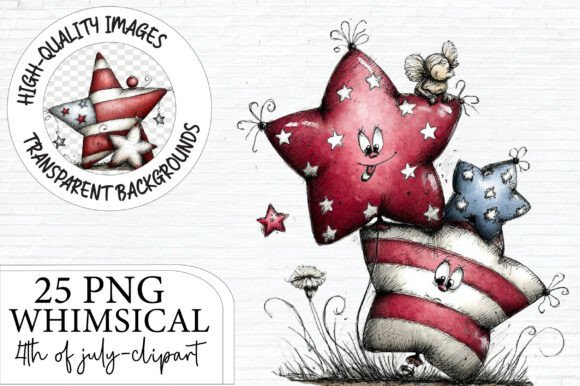
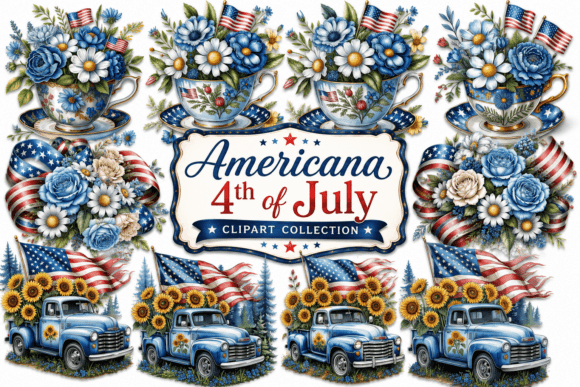
Each of the 10 designs serves a distinct compositional role: patriotic hearts anchor emotional tone; vintage lanterns add nostalgic texture; floral bouquets introduce organic warmth; American flags provide unmistakable symbolism; and rustic red, white, and blue elements (like distressed banners or woven ribbons) support cohesive color storytelling. Unlike generic vector packs that prioritize quantity over context, this set assumes the user will layer, scale, and integrate—not just drop in and move on. That intentionality shows in spacing, negative space management, and balanced visual weight across motifs.
Technical Specifications That Support Real-World Use
The file details reflect decisions made for both digital and print contexts. At 5120px × 5120px and 300 DPI, each PNG is genuinely print-ready—capable of scaling cleanly to full-page layouts, large-format banners, or detailed product mockups without pixelation or edge softening. The fully transparent background eliminates post-import cleanup, a consistent time-saver whether you’re working in Canva, Adobe Photoshop, Affinity Designer, or even PowerPoint. No watermark means no legal ambiguity or last-minute cropping compromises—especially important for commercial clients or branded educational materials.
Consistency Without Uniformity
A common pitfall in themed clipart collections is forced stylistic sameness—everything rendered in the same line weight, shading technique, or perspective. Here, variation exists within a shared aesthetic language: the lanterns have subtle grain texture; the floral bouquets use soft, natural petal layering; the hearts incorporate gentle watercolor bleed at edges. Yet all maintain crisp silhouettes and clean anti-aliasing. That balance allows mixing and matching across projects while preserving visual harmony. For example, pairing a vintage lantern with a modern flag graphic works because both honor proportion, contrast, and legibility—even if their rendering techniques differ.
Who Benefits Most—and How
Small business owners running seasonal promotions (think bakery window decals, farmers’ market banners, or limited-edition product labels) gain flexibility without needing custom illustration. A single lantern or heart can become a focal point on a social media graphic or email header—no need to license multiple assets or adjust layers for transparency.
Educators and curriculum designers appreciate the clarity and thematic relevance. A high-res American flag clipart element scales cleanly for classroom posters or interactive whiteboard slides, while floral bouquets lend warmth to student-made greeting cards or bulletin board displays—without requiring drawing skill or complex software.
Freelance designers and marketers often juggle tight deadlines and varied client expectations. Having ten distinct, production-ready assets means less time sourcing, editing, or troubleshooting resolution issues—and more time refining messaging or layout. The absence of watermarks or usage restrictions also simplifies client handoffs, especially when delivering layered source files.
Bloggers and content creators covering Americana culture, holiday traditions, or craft-based DIY topics find these elements useful for original featured images, Pinterest pins, or printable guides. Because each piece is isolated and high-resolution, they adapt well to different aspect ratios—cropping a bouquet for a square Instagram post or using the full flag width for a blog banner requires no reworking.
Practical Considerations and Limitations
This isn’t a toolkit for every scenario. It doesn’t include animated GIFs, SVG variants, or multi-layered PSD files with editable shadows or gradients. If your workflow relies heavily on scalable vectors for responsive web graphics—or if you need dozens of variations per motif—this collection’s curated scope may feel limiting. Likewise, it doesn’t contain typography, patterns, or full scene compositions. Its strength lies in singular, strong elements—not complete layouts.
Also worth noting: while the rustic aesthetic supports authenticity, it may not align with ultra-minimalist or corporate-branded campaigns seeking sleek, geometric interpretations of patriotism. Users aiming for bold, contemporary reinterpretations (e.g., neon-lit flags or abstract star fields) would need to supplement with other resources.
Integration Into Existing Workflows
These 4th of July clipart files behave predictably across platforms. In Canva, they import as clean PNGs with preserved transparency—no background removal step needed. In Adobe Illustrator, they paste at native resolution and scale smoothly when placed into AI or PDF exports. Even in basic tools like Google Slides, the high pixel density ensures sharpness on projectors or large monitors.
For users managing asset libraries, the uniform dimensions (5120×5120) simplify organization and batch processing. Naming conventions aren’t specified in the file details, but renaming each file descriptively (e.g., “4th-of-July-Clipart-Vintage-Lantern.png”) supports long-term usability—especially when building reusable templates across years.
Long-Term Value Beyond a Single Holiday Season
Well-executed Americana-themed assets often retain relevance beyond July 4th. The lanterns and floral elements, for instance, translate naturally to Memorial Day, Labor Day, or even general “small-town pride” themes. The red, white, and blue palette—when used selectively—can support civic engagement campaigns, voter education materials, or historical society exhibits. Because the designs avoid overtly dated trends (e.g., heavy grunge filters or overly saturated gradients), they age gracefully rather than feeling tied to a specific year’s visual language.
That durability matters for educators updating annual lesson plans or small businesses building seasonal brand equity. Investing in a set like this isn’t about one-time decoration—it’s about acquiring foundational assets that reinforce identity, consistency, and professionalism across multiple touchpoints.
Ultimately, this 4th of July clipart collection earns its place in a working creator’s toolkit not through flash or volume, but through reliability, thoughtful curation, and attention to how assets actually function in practice. It meets the quiet, unglamorous needs of real projects: speed, clarity, adaptability, and freedom from technical friction. For professionals who value precision over padding—and substance over spectacle—it’s a pragmatic resource worth keeping on hand.