Elegant Floral Bouquet Line Art
If you’ve spent time searching for clean, versatile floral designs—especially for Cricut projects, sublimation prints, wall art, or printable crafts—you’ve likely encountered dozens of “floral line art” bundles. But not all are created equal. The Elegant Floral Bouquet Line Art bundle stands out—not because it’s flashy or overpromised, but because it solves real problems creators face daily: inconsistent file quality, missing formats, unclear licensing, and botanical inaccuracies that undermine elegance.
What Makes This Bundle Actually Useful?
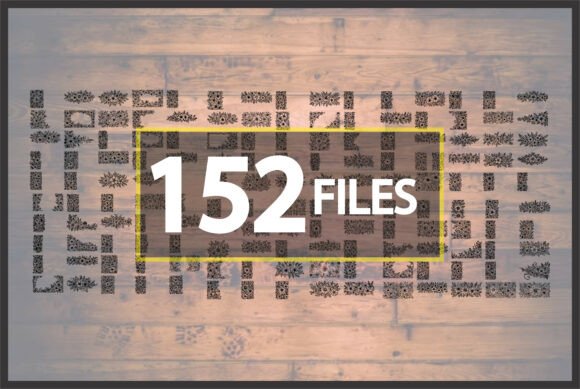
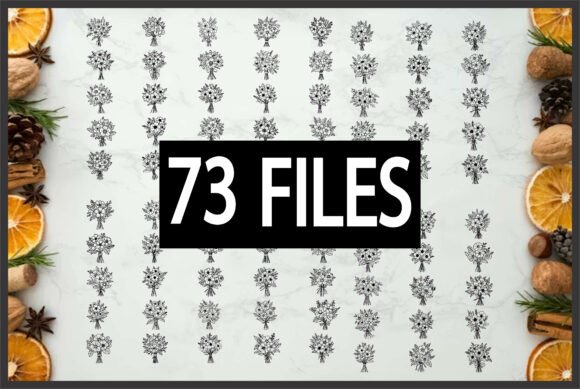
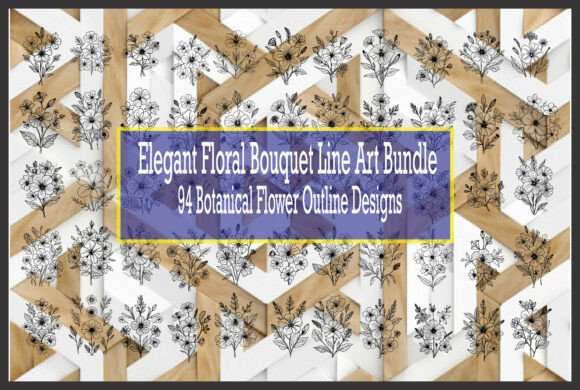
This isn’t just another collection of generic flower outlines. It’s a hand-drawn, cohesive set of 94 botanical line art designs, each carefully composed as a balanced bouquet—no awkward spacing, no stray stems, no mismatched scales. That consistency matters whether you’re laser-cutting delicate paper florals or resizing a design for a 12" x 12" t-shirt print. Because every piece is drawn by hand (not traced or auto-traced), the lines carry subtle variation—weight, flow, rhythm—that gives warmth and authenticity to minimalist work.
And the format coverage? It’s unusually thorough: EPS, AI, SVG, PNG, JPG, and PDF—all included, one-to-one, for each of the 94 designs. That means no scrambling to convert files mid-project, no losing crisp edges when scaling, and no surprise raster-only limitations when you need vector precision for engraving or vinyl cutting.
A Common Mistake: Assuming “More Files = More Value”
Some bundles advertise “500+ files” by counting every size variation, color version, or background layer separately—even if they’re all derived from the same base drawing. That inflates numbers but doesn’t expand creative flexibility. With Elegant Floral Bouquet Line Art, the “94 × 6 = 564 files” count reflects actual utility: one clean, scalable vector (EPS/AI/SVG), one high-res transparent PNG for overlays, one JPG for quick previews, and one PDF for printing or reference—each purpose-built.
Here’s what happens when you overlook this distinction: You buy a “500-file” pack, only to discover 80% are low-res PNGs with jagged edges at larger sizes—or worse, SVGs that won’t open in your version of Cricut Design Space due to unsupported effects. Time lost troubleshooting is time not spent creating.
Another Overlooked Detail: Licensing Clarity
Many free or low-cost floral clipart sources bury restrictive terms—like prohibiting use on physical products sold via Etsy, or requiring attribution even for commercial goods. That creates legal risk and extra workflow steps (e.g., adding tiny credits to product tags or packaging). The Elegant Floral Bouquet Line Art bundle grants clear, broad personal and commercial use rights, including digital downloads, physical goods (stickers, apparel, home decor), and client work—no hidden clauses, no renewal fees.
Before downloading any floral line art, always check: Does the license explicitly cover your intended use case? Is it transferable if you sell a business or freelance project? Does it include resale of the *files themselves* (which it shouldn’t—and this bundle doesn’t)?
Why File Type Matters More Than You Think
Say you’re designing wedding stationery. You choose a beautiful floral silhouette—but it arrives only as a JPG. When you try to resize it for an invitation envelope, the edges blur. Or you attempt to separate petals for layered foil stamping, but the raster image won’t allow path editing. That’s where having native AI and EPS files becomes non-negotiable. They preserve anchor points, layers, and scalability—essential for professional finishing.
Conversely, if you’re making Instagram story stickers or Canva social templates, you’ll want crisp, transparent PNGs—not vectors that require extra import steps. The bundle delivers both, without forcing you to choose one format over another.
Botanical Accuracy Affects Aesthetic Impact
Not all “floral” line art looks like real plants. Some bundles use stylized, almost cartoonish shapes that read as decorative—but fall flat in contexts demanding refinement: bridal branding, apothecary labels, or fine-art wall prints. The Elegant Floral Bouquet Line Art collection draws from real botanical references—roses with layered calyxes, eucalyptus with distinct leaf venation, peonies with natural petal overlap. That fidelity makes arrangements feel intentional, not generic.
Ask yourself: Does this floral line art support the mood I’m trying to create? Delicate linework suits feminine stationery; bolder strokes suit modern signage. These 94 designs lean elegant—not fussy, not stark—so they adapt across niches: wellness brands, boutique retail, educators making classroom posters, or therapists designing calming printable journals.
Practical Checks Before You Use or Buy
- Open one SVG in your primary design tool (Cricut, Silhouette Studio, Adobe Illustrator) before committing. If it loads with missing strokes or embedded raster elements, the bundle may not be production-ready.
- Zoom in on a PNG sample at 300%—do edges stay sharp? Fuzzy halos or pixelation signal poor export settings.
- Verify folder structure. Well-organized bundles group files by design name (e.g., “Rosa_Bouquet_01_SVG”)—not “Flower_1”, “Flower_2”. That saves hours when managing large projects.
- Look for consistent stroke weight. Uneven lines (some hair-thin, others thick and blunt) break visual harmony—especially in monochrome applications like tattoo stencils or engraved wood.
Better Choices Start With Intention
You don’t need every floral design ever made. You need the right 94—ones that align with your tools, your audience, and your standards. The Elegant Floral Bouquet Line Art bundle works because it assumes you value clarity over clutter, accuracy over approximation, and usability over volume.
Whether you’re a small-batch sticker maker testing new designs, a blogger creating printable planners, or a wedding planner sourcing elegant decor assets—the time you save avoiding conversion errors, licensing confusion, or aesthetic mismatches pays for itself in your first completed project. And because these are hand-drawn botanical illustrations—not algorithm-generated patterns—they retain the quiet confidence that comes from human craft. That’s hard to replicate. And harder to replace.